Mikrodozēšana isn’t always a walk in the park. Sure, sometimes it brings you focus, flow, and that subtle creative spark you’ve been craving. But occasionally? It can bring something entirely different: a wave of emotions you didn’t see coming. Grief, anger, sadness, or even tears you didn’t realize were just beneath the surface of your daily routine.
If that’s happened to you, you’re not alone. And more importantly, it’s not a sign you’re “doing it wrong.” It’s actually a sign that something deep inside you is beginning to shift — and that can be one of the most healing parts of the microdosing journey.

Why Microdosing Psilocybin Can Stir Up Your Feelings
When you take even a tiny amount of psilocybin, it doesn’t just sharpen your focus or help you get into “the zone." It also gently interacts with the parts of your brain that regulate emotions and memory.
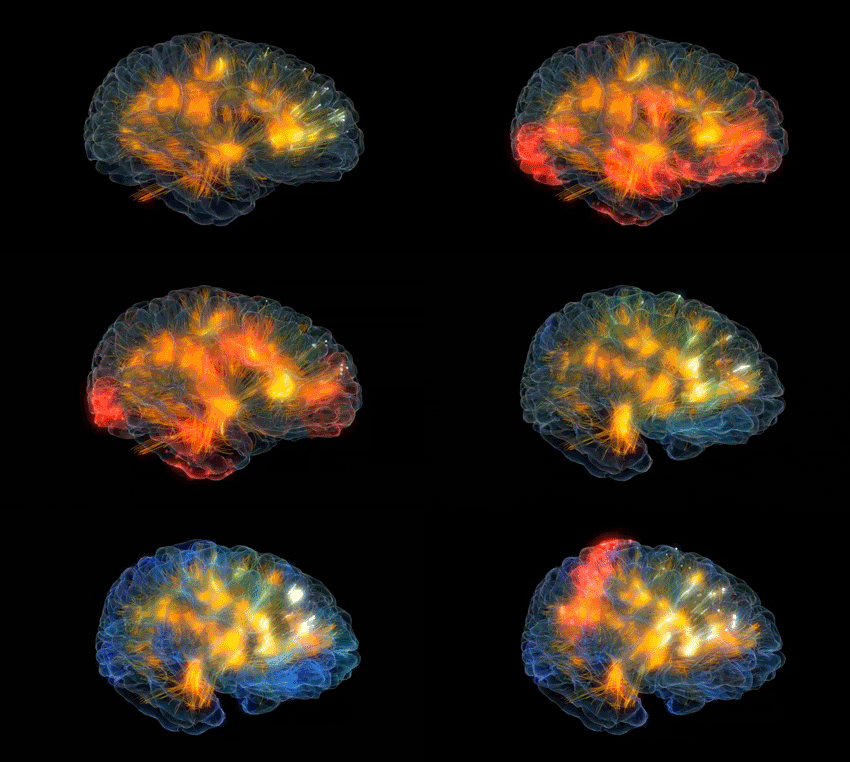
One big change is in the Noklusējuma režīms Tīkls (DMN), the system in your brain that’s constantly looping thoughts, ruminations, and self-talk. Microdosing quiets that chatter. And when the DMN dials down, old feelings, memories, or tensions that you’ve been ignoring or suppressing can suddenly bubble up.
This is what many in the psychedelic world call emergence. This is when unresolved emotions finally find a safe moment to rise. It’s not about “new” emotions being created; it’s about finally feeling what’s already been there, waiting to be acknowledged.
On top of that, psilocybin increases neiroplasticitāte, your brain’s ability to rewire and form new connections. That’s great for breaking out of mental ruts, but it also means you’re more open to processing what you’ve been carrying.
It’s Not a Setback — It’s an Opening
Maybe you’ve had a day where, instead of effortless productivity, you suddenly feel heavy, anxious, or inexplicably sad. It can be disorienting, especially if you started microdosing expecting clarity, not crying.
But here’s the thing: those emotions are messengers. Feeling them doesn’t mean you’re failing. It means your system is recalibrating. It’s giving you access to something real, something that — once integrated — can make you lighter, freer, and even more connected.
This is why many experienced microdosers say the “tender” days are where the deepest healing begins. They’re invitations, not interruptions.
How to Support Yourself Through Emotional Waves
When emotions rise during microdosing, the most important thing you can do is create space, not pressure. Here are some gentle ways to navigate those moments:
- Pause and notice – Instead of judging or trying to analyze, simply observe. Where do you feel the emotion in your body? Can you name it without attaching a story to it?
- Move or breathe – A slow walk in nature, some gentle stretching, or a few minutes of deep breathing can help emotions move through your system.
- Journaling or voice notes – Write or record honestly: “I feel heavier than usual today. Something is surfacing, but I’m not sure what it is yet.” This builds trust with yourself.
- Check your protocol – Are you taking too much or too often? Protocols like the Fadimana metode (one day on, two off) vai Stamets stack can be great guides, but they aren’t one-size-fits-all. Taking a break doesn’t mean failure… it means you’re listening.

Integration: Where the Magic Happens
Here’s a secret: the real growth often doesn’t happen during the microdose itself — it happens after. This process, called integrācija, is where you make sense of what came up and start to weave it into your daily life.
Try these integration practices:
- Self-care – Take a bath, go for a solo walk, or just give yourself permission to rest.
- Creative expression – Draw, write, or make music to give form to what you’re feeling.
- Talk it out – A therapist familiar with psychedelic integration can be a game-changer. Or, if that’s not accessible, try writing a letter to yourself or talking with a trusted friend.
- Community – Online spaces or local integration circles are full of people navigating the same waves. Sharing your experience can remind you you’re not alone.
When to Step Back and Seek Help
Most of the time, emotional surfacing during microdosing is healthy and even healing. But if you find yourself feeling consistently overwhelmed, unable to function, or stuck in intrusive thoughts, it may be a sign to pause and reach out for professional support.
Microdosing is powerful, but it’s not a replacement for therapy or mental health care. There’s no shame in seeking guidance. It’s actually one of the bravest things you can do.
Summary: The Gift of Feeling More

If microdosing has surprised you with unexpected emotions, remember this: feeling more isn’t failure. It’s the work. It’s your mind and body opening the door to deeper healing and self-understanding. Emotions aren’t distractions. They’re data. They’re the stories your body ir waiting for you to hear.
Some days will feel light and expansive. Others may feel raw and heavy. Both are part of the process. Give yourself permission to slow down, to rest, to take breaks, and to ask for help when you need it.
Because microdosing isn’t about hacking your brain. It’s about honoring it. And every emotion — even the tough ones — is part of that sacred conversation.