Robots Run by Mushrooms?! 🍄🤖
The strange, magical world of biohybrid robots
What do you picture when you think of a robot? Probably something shiny, chrome, humming with wires, maybe even spouting AI-generated poetry. But what if we told you the future of robotics wasn’t just silicon and steel — but mushrooms?
Yep, you read that right. Researchers at Cornell University have created robots powered by fungi. Instead of algorithms and batteries, these so-called “biohybrid robots” are literally guided by the electrical signals of mushrooms. Weird? Absolutely. Cool? Totally. Magical? 100%.
The Rise of Mushroom Machines
The star of this new robotic show is the king oyster mushroom, the same chunky mushroom you might fry up in garlic butter. But instead of being sautéed, these mushrooms had their mycélium cultivated onto 3D-printed scaffolds fitted with electrodes.
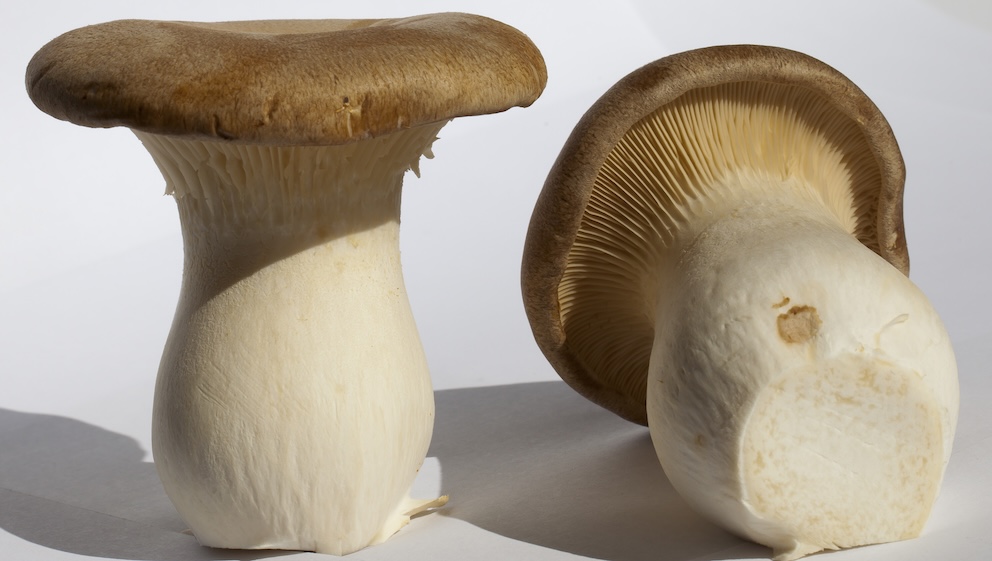
Why mycelium? Because fungal networks naturally pulse with tiny electrical impulses in response to their environment — like miniature lightning bolts firing through underground mushroom highways. Sound familiar? It should — this is exactly how our brains’ neurons talk to each other.
By hooking those fungal impulses up to a computer, the scientists essentially created a fungi-computer translator. When the mushrooms react to their surroundings (like, say, a sudden blast of light), their electrical chatter gets converted into digital commands, which in turn power the robots’ motors.
The result? A starfish-like robot that shuffles across the floor and a little wheeled robot that zips about. Not from batteries, not from AI code, but from mushrooms.
“Mushrooms don’t like light, they grow in dark areas,” explains engineer Robert Shepherd of Cornell University. “Since they really don’t like light, that provided a strong signal.”
So by shining more ultraviolet light on the mycelium, the robots actually move faster. Fungi-powered speed boosters. Who knew?
Why Not Just Use AI?
AI is getting all the buzz right now, but biohybrid robotics is carving out a very different (and perhaps more sustainable) future. For years, researchers have experimented with robots powered by living cells: rat muscle robots that walk, jellyfish-cell swimmers, and even mouse-neuron machines that can “think” in their own twitchy little way.
But animal-cell robots are expensive, ethically complicated, and hard to keep alive. Plant-cell robots? They’re gentler on the ethics, but sloooow to react. Enter fungi:
- Cheap and easy to grow. King oysters aren’t exactly rare.
- Tough as nails. They can survive radiation, freezing temps, and salty water.
- Responsive. Their electrical impulses fire in milliseconds, perfect for quick robot reactions.
In other words: mushrooms are the Goldilocks of biohybrid robotics. Not too complicated, not too sluggish, presne tak, ako má byť.
What Can Mushroom Robots Do?
The potential uses of fungi-powered bots are almost as mind-bending as the concept itself.
🌱 Farming and Crops
Because fungi are hyper-sensitive to their environment, they could help detect pathogens, toxins, or chemical contaminants in fields faster and better than conventional machines.
🌊 Environmental Work
Imagine a swarm of mushroom-guided robots monitoring coral reefs. If you can’t collect them all at the end, no big deal — they’re biodegradable, unlike e-waste-filled bots.
☢️ Hazardous Zones
Thanks to their radiation resistance, fungi robots could one day help monitor nuclear disaster sites.
🚀 Space Exploration
Perhaps the trippiest idea: sending a tiny amount of mycelium into priestor, growing it on Mars or the Moon, and using it to build robots there. Local, sustainable, mushroom-powered rovers. How’s that for cosmic fungi magic?
As engineer Vickie Webster-Wood of Carnegie Mellon points out, this is about building robots with biology instead of polluting metals and plastics:
“If you’re trying to build a swarm of robots to go monitor a coral reef, and you build them out of electronics with heavy metals and plastics, that’s a lot of waste… Building with biology is more sustainable.”

The Magic of Fungal Intelligence
Here’s where it gets poetic: mushrooms don’t “think” like AI, but they sense, feel, and respond to their environments in ways that often seem far more intelligent. We’ve long known that mycelium networks behave like living communication webs—passing signals, adapting, problem-solving.
Now, with fungal biohybrids, those subtle signals are directly moving machines. This isn’t artificial intelligence. It’s something much wilder: natural intelligence, channeled into motion.
Compared to the cold predictability of AI, mushroom robotics feels — dare we say — enchanted. A merging of life and technology that reminds us the future doesn’t have to be all steel and servers. It could also be earthy, organic, and a little bit magical.

Quick Facts: Mushroom Robots 🍄🤖
- Fungi Used: King oyster mushrooms (mycelium cultivated on 3D scaffolds).
- How They Work: Fungal electrical impulses are converted into digital commands that control motors.
- Robots Built: A starfish-like crawler and a wheeled bot.
- Response Trigger: Light (fungi hate it, so they react strongly when exposed).
- Potential Uses: Farming, environmental monitoring, radiation detection, even space robotics.
- Why Fungi are Perfect: Cheap, tough, biodegradable, and magically alive.
✨ In short: Forget AI overlords. The future might just belong to humble mushrooms, guiding robots across fields, reefs, and maybe even alien planets. Technology with roots in biology — not just lines of code. Strange, sustainable, and kind of magical.